Trail Review: SHT Cramer Rd to Temperance River

I haven’t done a trail review in awhile, since many of my runs have been either on the same portions of trails I run over and over again, or they don’t have definitive starting/stopping points.

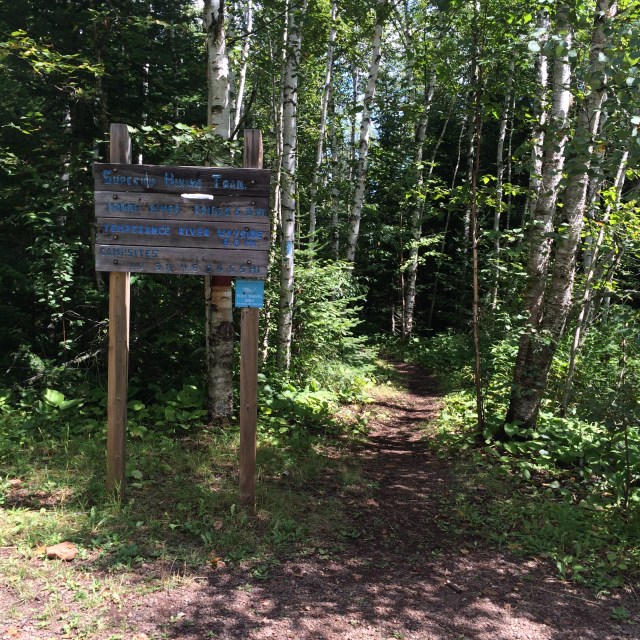
Over the weekend, I ran the first 8 miles of the Moose Mountain Marathon course, starting at the Cramer Rd trailhead in Schroeder, MN.

cramerrd

The trail starts off with some rocks and roots, but nothing overly technical, and remains fairly runnable for several miles. There are a few ups and downs in the first 2 miles, but nothing exceptionally tiring. There are a few places where the entire width of the trail is rock (as in, one single slab, not as in many small rocks), which I don’t like, due to the lack of traction. If the course is dry and mud-free, it’s not a big deal, but I did find it slick in spots since it rained while I was out running. Some of the plank bridges also got a little slippery, in fact I nearly twisted an ankle sliding sideways off of one. I am sure in drier conditions they are fine, although the wood is well-worn so I did find I was struggling with traction even on drier boards.

After about 3 miles, the trail starts to follow the Cross River, and that is some of the most pleasant running I’ve ever had. The trail is relatively flat and easy to traverse along the river, with a few tough spots, but the sound of the river rushing by is heavenly. The trail crosses the Cross River at a bridge 5.3 miles in. The ascent out of the river is a bit steep at first, with a ladder to climb, but it is not overly difficult after that point.

The descent down to the Temperance River, which comes about a mile and a half after the Cross River bridge, is fairly steep and lasts for about a mile. The next trailhead is at the end of the descent, but I continued along the trail down to the bridge crossing the river, which is about 3/4 mi past the parking lot. The trail follows the Temperance River fairly closely, with lots of great views that I did not photograph, I am very sorry. It’s worth seeing in person. It is a pretty popular spot along the SHT, so I had to dodge a few groups of hikers as I went along, and then encountered all of them again when I turned around.

Speaking of turning around: taking this hike in reverse is much, MUCH more difficult. The long descent to the river turns into a long, steep climb that seems endless. I tried not to think that it was almost over, that it couldn’t keep going, but at times I got frustrated. I didn’t stop, which was good, but I lost all energy and will to keep moving once I got to the top. Or what I thought was the top, which wasn’t, because after maybe 0.2 miles, I had another little climb. It was a little blip, but for someone already beaten down by the trail, it felt like a lot. There seemed to be more uphill than I thought there would be, since the descent coming out had been more gradual. I was feeling it on the way back, that’s for sure. I pulled it together for the final 3 miles, after eating some food and catching some easy sections of the trail.

Despite the frustrating climb, this is a new favorite section of the Superior Hiking Trail, thanks to the 2 miles along the Cross River and the portion along the Temperance River. Running from Cramer Rd to Temperance was significantly more enjoyable than running the opposite way, but there was no way to avoid that, since I was running alone.

Regarding the Moose Mountain Marathon in particular:

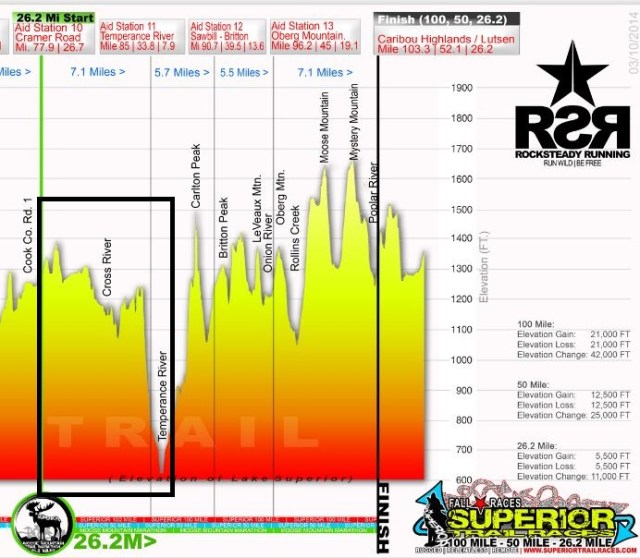
Here’s the race elevation profile, with the section I ran highlighted. (The image is from the Superior Fall Trail Races site):

MMM1

So, it’s the easy portion of the race. Look at that ascent out of Temperance heading toward Carlton Peak. Great googly moogly, that will never end.

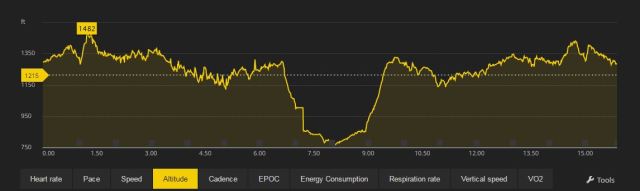
This is the actual elevation captured by my GPS (remember the first 8 is the marathon course, the second 8 is my return trip, not the next 8 of the MMM). I think the narrower scale of the map gives a clearer picture of the “feel” of this section of the race, although it sure doesn’t make that climb look any better. There’s a slight error in the data on the descent into Temperance River – the profile in the ascent is much more accurate. Yes, it does feel like going straight up, although I’m sure other races have steeper sections than this.

MMM2

Moose Mountain Marathon Training: Week 2

I’m living in denial. This marathon isn’t less than a month away. Everything’s fine.

Monday: 5.1 mi, road, 142 bpm
Tuesday: 7.2 mi, trail (SHT starting @ Twin Ponds), 157 bpm
Wednesday: 5.2 mi, road/trail (including 7x Chester Bowl ski hill), 152 bpm
Thursday: rest (30 min of yoga)
Friday: 5.2 mi, paved trail (Lakewalk), 141 bpm + 20 mins of yoga
Saturday: 15.9 mi, trail (SHT @ Cramer Rd), 155 bpm
Sunday: 5.2 mi, road, 135 bpm
Total: 43.7 mi

Definitely a quality week of workouts. But also a reminder that I don’t feel very ready for a marathon.

One notable stat to mention is my average heart rate on these runs. Half of them have average heart rates over the target of 143 bpm I had when I was doing MAF training. I’m not sure if this is good or bad. It’s freeing, not being tethered to that monitor and obsessing over staying aerobic. But now I’m in a sort of no-woman’s-land, with some aerobic workouts, some that are mostly aerobic, and some spots where I’m hitting my max heart rate (or thereabouts). It’s probably not good to hit my max heart rate on a long run. But what am I supposed to do when there’s a huge steep hill to climb? Climb it, heart rate be damned.

I was fairly pleased with my run on Tuesday. It was HOT when I started, although I waited til about 6:15 pm to start, so I didn’t have the blazing sun on me. I managed a much faster pace than I normally do for trail training runs, even on the steep climb I hit after leaving the Lincoln Park area. Between that run and my hill workout the next night, I was feeling pretty confident about my training.

Saturday I ran the first ~8 miles of the Moose Mountain Marathon course. I’ll have some details on that run later, but I made some key observations during this run. First, even with all the climbing I’ve been doing, I’m still not in super great shape for the big climbs. I really struggled on the way up from the Temperance River after I turned around, and I know that the climb out of the river is even harder in the opposite direction, since it crests Carlton Peak. I am nervous about that. I was swearing and getting frustrated during miles 10-12 on Saturday. I think I can also attribute that to poor nutrition. I need to be better about timing my food so that I’ve got energy during a climb. I pulled myself together once after those few low miles, but I was really, REALLY cranky for awhile. And also very nervous, because of the challenges that will face me on the course next month. I guess I need to constantly stuff my face with food while running.

Sunday I was a little bit sore in the quads and stiff in general, and I lacked energy on my recovery run. Not surprising. After my run I had to sit in the car for an hour and a half to drive back, not an ideal situation. I got home from Sunday’s run just as the men’s 400m finals began, so I got to see Wayde van Nienkirk’s amazing race. Perfect timing.

Somewhere on Sunday, while I was cursing and grumbling, I surpassed 1000 miles for the year. I’m less than 200 miles from surpassing my total miles for 2015, so I’m on track for this to be my biggest year yet!

Process-Based Goals

In my previous post, I wrote about my focus for the rest of my Moose Mountain Marathon training: to run in a more engaged way, instead of settling back and running a too-slow pace because it feels “easy.” Running “engaged” to me doesn’t mean running hard all the time. Like I said, I’ve found many times that I thought I was running at a decent clip, only to look down and see I’m running a 19 or 20 minute pace (on trails). I’ve found that by altering my form, I can run faster while still maintaining an aerobic heart rate (if that’s the plan for the workout), but I tend to settle into a form that lends itself to slower-paced running, when I’m not engaged.

Then on Tuesday, I read an article on I Run Far by Joe Uhan about setting process goals rather than outcome goals. It sounded exactly like what I was talking about.

“A process goal is a subjective, qualitative measure of how something is done, rather than how much or how fast. Examples of process goals might include how a run feels (the goal to ‘find ease’) or how the body moves (biomechanical goals such as ‘quick feet, strong arms, and forward lean’). Sometimes the processes are analog: ‘go run’ or ‘go to sleep now.’ But built into each process goal is both an execution–do or do not–and a feel.”

In my first paragraph I described a biomechanical process goal without realizing I was. People set process goals for races a lot, without realizing it. Usually those process goals are “finish smiling” or “finish strong” or something similar. However, those process goals are often B or C or Z goals, with an outcome-based A goal (finish under X hours, set a PR, finish in the top 10/top 3/etc.). And the process goals aren’t taken as seriously, or are there as an afterthought but would be considered a failure. I mean, would anyone ever set a goal of finishing, say, a 100 mile race under 24 hours, and then be happy with a 36:59:59 finish as long as they were smiling? Probably not unless they had some kind of beatific transformation while out on the trails. Which we all do, don’t we? But not to that extent.

I don’t know if I can ever really eliminate outcome-based goals from my running strategies. I like focusing on hitting times. I don’t worry too much about placing because it’s unrealistic for me. I like to see how my placing has improved in 5Ks, but that has as much to do with the makeup of the race entrants as it does about my abilities as a runner. I also like the certainty of knowing I hit those goals. How do I know if I’ve achieved a process-based goal? It’s a feeling. Yesterday, I ran 7 miles on the Superior Hiking Trail, starting at Twin Ponds and running toward Enger/Piedmont/out that general way. It was pretty hot, probably still in the high 80s F, when I started, and I felt a bit funky for the first mile or two, but I really tried to stay engaged on the flats, downhills, and gentle uphills. I ended up with a much better pace than the last time I’d run a similar course, and a much better pace than I normally hit on Superior Hiking Trail runs. Granted, I also had a much higher average heart rate than I have had on some of those runs, but it was hot and I was also powering up the hills. There were also times when I did notice myself settling in or running lazily. And there were times when I wasn’t letting my heart rate recover enough and should have slowed down, but continued to push. So does that mean I made my goal or not? I felt like I did. So I did. Participation trophy, please.

I’m interested in seeing what else I can learn from the rest of the columns on this topic (the article was part 1 of I think 3?), and how my training and racing will be affected by what I discover.

Race Report: Voyageur 50 (Volunteering)

Volunteering at an aid station is a surefire cure for the running blues.

The Curnow Trail Marathon only set me back $10, as I made a commitment to volunteering for the Voyageur. So while DNS-ing the race had a significant impact on my dignity and self-esteem, the financial impact was minimal.

The Voyageur 50 is an out-and back race which follows essentially the same trail as the Curnow Marathon. It starts and ends in Carlton, instead of starting at the Zoo and ending in Carlton. This means some aid stations end up being open for quite awhile. I was at the Forbay Lake aid station, which was at mile 5.8/44.2, so it was a long day to staff. I only worked the afternoon portion, arriving around 11:45, about 5 minutes before the lead runner arrived. The aid station captain and 3 of the other women already there when I arrived had been there since 6 a.m., and stayed until 4 or later, so it was a really long day! They did have a long lull after the final runners went through and got in a run. Two other people arrived midway through my shift, and four of us closed down the aid station, along with one of the ham radio operators.

The first thing I have to do is compliment the race staff and our aid station captain for being on top of things. We were prepared for runners’ needs (within reason) and didn’t run out of anything except ginger ale and maybe watermelon at the very end. When we ran low on ice and watermelon, the race staff was there to refill us well in advance of truly running out, since the AS captain had thought to call ahead with plenty of time. We had more than enough water and sports drink, and runners were always able to grab what they needed off the table. The only things they really had to wait for were ice (which we scooped from coolers) and bottle/hydration pack refills.

My job was to mark down the numbers of runners as they came through. At first, I shared this job with another woman, who I finally realized looked familiar because I had seen her at Superior; she was one of the top women finishers (though I don’t believe a podium finisher). I felt kinda dumb because I was talking about what it’s like to be slow to someone who doesn’t know anything about being slow! For the most part, it wasn’t too hard to get all the numbers down, although sometimes we couldn’t read the numbers til the runners were practically on top of us. We didn’t have a single drop at our aid station, and only 3 runners who were cut by the grim reaper after the cutoff, so we didn’t have to call in many numbers.

Beyond collecting numbers, I helped out filling water bottles, replenishing drink cups, scooping ice into hats, and anything else that was needed. I sprayed one guy down with sunscreen I’d brought for myself; he was shirtless and sweaty and trying to apply sunscreen lotion to his back, but it was fruitless. I gave him a few spritzes and he was on his way. Our group talked to everyone, whether it was just to be friendly, to try to assess their condition, or to offer some encouragement to someone struggling. We reassured people they hardly had any distance left, and it was easy — at least until the next aid station. We answered their questions with a smile, and then answered the same question again when they forgot they’d even asked it. “2.4 miles to the next aid station, then 3.4 to the finish. 5.8 total.” I said that probably 500 times, if you consider that there were over 300 runners and I repeated it to many people.

No one came into the aid station looking like a zombie, or vomiting profusely, or covered in blood. Very few people even looked like they needed an extra eye on them while they ate or drank. It seemed anyone who was struggling or sick or injured badly had already been weeded out by the tough course, and anyone who reached us before the cutoff was destined to finish. I was pretty grateful no one barfed on or near me, as I always am. The AS captain’s son was running the race, and her husband and other son, who were crewing for him, arrived in the late afternoon to hang out, help with runners, and wait for their runner to show up. He had a bit of a rough day, but since his family was running the aid station, he didn’t get much pity. The other runners coming through with him got a secondhand dose of parental tough love, which they thought was funny.

The final hour or so before the cutoff, the aid station got rather quiet. We’d been bustling in the mid-afternoon, with crews showing up hoping to catch their family or friend and offer encouragement or help them get what they needed. (I was really grateful when a large group of runners came through and a few of them had crew; it allowed us to serve the crew-less runners more quickly.) Watching them was interesting. Some were anxious. Some barely seemed bothered (or were too busy entertaining kids to be anxious). Some were tired, others had already completed the race or had dropped and were coming to crew others. (One left his race number on and I nearly wrote it down multiple times before finally exercising my authority and making him take it off.) Some barely made it in time for their runners or even missed them, others camped out well in advance of their runner’s arrival. Some crews were efficient, with loads of extra supplies, receiving orders from their runners. Others were there simply to give a hug and a kiss and support. Some brought very cute dogs, others brought very cute kids.

In the final hour, we had several large groups of runners burst through together, and then long lulls. We watched the time tick away, hoping for more runners to make it. The race had started late, so the cutoff had been extended about 5 minutes. We got them through quickly, shouting encouragement. I told one woman who looked a little desperate that I had no doubt she would finish. I don’t know if that helped much, but I think she finished. (It’s Wednesday and the results have not been published yet.) The final guy through was told by the race official that he had to keep going, couldn’t stop for aid. And then the next guy, a few minutes later, was cut.

I really felt for the three men who sat with us at the aid station after we’d closed, knowing they were so close to the finish line, not looking particularly worse for the wear, but unable to continue. I spent quite awhile talking with one of them. He told me about his coach (Michael Borst, the winner of the race!), and how he’d learned so much and had finished the Zumbro 50 thanks to his advice and expertise. I really felt badly, and I told him “It takes a lot of courage to run a race when you’re not sure you’ll make the cut-offs. It’s one thing to be fast and have a bad race, but still come in well before the cut-offs. It’s another thing to know that even a good race might get you cut.” Or something to that effect. I hope it helped a little. It seemed to, at least for a moment. But I also know it was pretty embarrassing and dejecting for those 3 guys sitting there, waiting to figure out rides, and then finally piling into a race official’s car to get a ride back to the finish. Especially when the finish was only 5.8 miles away.

It took awhile for the sweeps to come; so long, in fact, that I jogged out on the trail with one of the other volunteers to look for them. I’m not sure how far we went out, maybe half a mile, and then turned around without finding them. If we’d just gone a little farther, we’d have found them, as they arrived a few minutes after we returned. They took some food and water and then left, and we finished the final few tasks involved in breaking down the aid station. I’m not a huge fan of that part of an event (who is?), but with fun people to work with, it wasn’t terrible.

I really enjoyed working at the aid station, although I still think my favorite volunteer experience was working the finish line at Superior last fall. I’m glad I did it; not only did it give me a chance to give back to the trail running community and to give the kind of service to other runners that I have received at numerous aid stations, it also re-motivated me to train for the Moose Mountain Marathon. I missed running and missed racing, although from the tales of the Curnow Marathon I heard from the women at the aid station, I felt a little more justified in skipping the race. I was not prepared to climb up slick, muddy hills after being awake for 30 hours. I’m a little more at peace with my decision.

Thanks, Voyageur runners and volunteers, for inspiring me and re-energizing me for the next 6 weeks of training. I’m happy to be back on the trails.
Eugene Curnow Trail Marathon Training: Week 8

Technically I guess this is now Moose Mountain Marathon training.

Monday: 5 mi, treadmill, 145 bpm
Tuesday: rest
Wednesday: 5.3 mi, paved trail (Lakewalk starting @ East HS), 137 bpm
Thursday: 4.3 mi, paved trail (Lakewalk starting @ Brighton Beach), 134 bpm
Friday: rest
Saturday: 10 mi, trail (SHT starting at Lismore Rd), no HRM
Sunday: 13.1 mi, paved trail (Munger Trail starting at Munger Inn), 146 bpm
Total: 37.9 mi

Not much to say. Most of the week consisted of maintenance runs, assuming I’d be racing on Saturday. Then I ran two rather punishing runs over the weekend in self-flagellation.

I’ll just wallow in self pity a little bit longer and then maybe start enjoying running again.

Sunk Costs

At 3:38 this morning, half an hour or so before my alarm, I got out of bed and sent a defeated email to the race director, scratching myself from the race. I’d been tossing and turning and unable to sleep, and I couldn’t start my first marathon after being up for 24 hours.

So, I’m not a marathoner. Just embarrassed. It was a beautiful day, I had good (not great, but good) training, and I was finally coming to accept that I could actually complete the race. Of all the things to go wrong, all the reasons I might not get to the finish line, I didn’t think it would be something that would prevent me from getting to the starting line.

And people run races sleep-deprived all the time. I know I shouldn’t compare myself to others, but this is different. This isn’t about speed or physical ability, things that are not completely within my control. Mental toughness is completely within my control, and I wimped out. People running Hardrock right now have had less sleep than I would have by the time the race ended.

I made a good decision that I can’t seem to live with. I do think it was the right decision for me: I’ve never run a marathon before, I would have had to drive myself to the race already sleep-deprived, and I wasn’t running with a crew, so if I was unable to continue, I wouldn’t have had a way to get home and would have had to beg for a ride to the finish, or sit at an aid station until my husband finally woke up (he sleeps late on the weekends due to an unusual shift schedule) and could come get me. Not ideal.

I’m still mad at myself. Mostly for not being able to even muster 3 lousy hours of sleep. I’ve run on little sleep before, like at Zumbro. But never on no sleep. And maybe I did really get some sleep and just didn’t realize it, but I doubt it. My fitness tracker shows me restless more than once an hour, and doesn’t show my heart rate dipping down to the level it normally is while I’m sleeping until after I’d sent my email and gone back to bed. And even then, it took me awhile to fall asleep and I still woke up around 9. Race anxiety got the best of me, it seems.

I’m not sure what I could have done differently. I thought about a lot of different things. Take a sleep aid? I went to bed at my normal time, I’m tired at that time almost every night. I didn’t sleep in on Friday, either, probably only got 5-6 total hours of sleep Thursday night (another factor in my decision not to run). I wouldn’t have known I needed a sleep aid until it was too late. They don’t always work, either, they tend to either backfire, or make me sleepy long after they wear off. Plus I always fear when I take them, I’ll sleep through my alarm. Eat something different or eat earlier? I always eat late and had no stomach issues last night. Not drink a pop before bed? Again, I drink a pop with dinner most nights (it’s my one pop of the day and IDGAF if I shouldn’t have it), and I don’t have trouble sleeping. Go to bed earlier? I wasn’t tired earlier, that would have been pointless. Run a few miles to tire me out a little more? Maybe. I considered that and then realized I still had to go check out where I was going to park in the morning, so I didn’t have time to run a couple miles.

The only thing I think I could have done differently was change the logistics of my plan. I worried about parking more than anything else. I was afraid there wouldn’t be a spot to park (it’s pretty limited), but I didn’t want to take the bus from Carlton at 4:45; I’d have to have gotten up earlier and driven in the dark to the finish line. I guess I should have just done that, but I wanted to have my car with me and have a little more freedom. I’m not sure that would have helped, but I did worry about it. So if I do this next year: I’m taking the bus.

I need to turn this setback into something positive. Besides saving money by canceling my post-race massage, I mean.

I still have the Moose Mountain Marathon to complete, and I have work to do. Weight to lose. Diet to improve. Speed to increase. Core muscles to strengthen. All the things I put by the wayside as I rushed to train for this marathon, and started getting a little mentally checked out. I was going through the motions of getting the miles in, but I wasn’t doing much else. So here’s my chance to make it right, and to toe the line in Schroder on September 10th with confidence and strength.

Eugene Curnow Trail Marathon Goals

24 hours from now, I’ll be departing at the Lake Superior Zoo, hopefully at a decent pace and hopefully not needing to pee already.

A couple weeks ago, I was wearing headphones on a run, one of the rare times I do, and this song came on and it is now my mantra for the race.

I will not go down under the ground
“Cause somebody tells me that death’s comin’ ’round
An’ I will not carry myself down to die
When I go to my grave my head will be high,
Let me die in my footsteps
Before I go down under the ground.

I’m not going to give up. I’m going to battle through anything this race throws at me, whether it’s heat or rain or mud or who knows? I’m prepared, or as prepared as I can be. I’m going to be a marathoner by tomorrow afternoon.

Goals:
A Standard: 8:30:00
B Standard: 9:00:00
C Standard: 9:59:59

I don’t usually have a back-up back-up before the race begins, but there are so many unknowns that I figured I’d better have more options for success. I made a “laminated” (covered in clear tape) chart noting what time I’d need to arrive at each aid station in order to be on pace for each of these goals. This will eliminate any need to compensate for GPS error, and will allow me to know my situation even if my GPS watch dies.

All of these goal times are at paces slower than even my Superior 25K race, which was somewhat of a disaster. UltraSignup suggests I should target a finish time of 8:53:16, which is very precise. I’d take that, for sure.

I’ve still got a laundry list of things left to do, although the list is long because I have gotten very detailed. I have things like “fill hydration pack” on the list. I also have writing this post on my list. Check. So, I don’t have a lot of big stuff to do, just a billion little things that will take a few seconds apiece. I bought a lot of gels and put my precious vanilla Coke in the fridge. I’m ready.

The usual non-pace-related goals apply: I don’t want to puke, become incontinent, pass out, or otherwise have a medical emergency. I don’t want to get struck by lightning in the event of a storm. I don’t want to get poison ivy when I have to step off the trail to pee. I don’t want to get swept or pulled off the course for weather-related issues. (I don’t know if this race actually sweeps, they give no cut-off times.) I need get in a couple warm up miles, especially since I’ve been sluggish the past couple days. I will start at the back of the pack as I always do, and run my own race.

Let me drink from the waters where the mountain streams flood
Let me smell of wildflowers flow free through my blood
Let me sleep in your meadows with the green grassy leaves
Let me walk down the highway with my brother in peace.
Let me die in my footsteps
Before I go down under the ground.